Hibernation is a state of
inactivity and metabolic depression in endotherms. Hibernation refers to a
season of heterothermy characterized by low body temperature, slow breathing
and heart rate, and low metabolic rate. (Wikipedia)
It has been so cold the past few days that I have been
unable to leave the house. And that got me to thinking, can humans hibernate?
I found the following answer to this question on the Popular
Science web site:
Involuntarily?
Yes. On purpose? Maybe. In February (2012), for instance, Swedish snowmobilers
found a man who had been trapped under snow in his car for two months with
barely any food. After he was rescued, local doctors suggested that he had
survived by adjusting his core body temperature downward to about 88ºF and
keeping still, the same process bears use to hibernate.
Some people, such as those who practice meditation, can
enter a hibernation-like state on purpose. When a person falls asleep, his
body's oxygen use typically drops by only about 6 percent. Herbert Benson, a
professor of medicine at Harvard Medical School, has studied Tibetan monks in
deep meditation and found that they can decrease their oxygen needs by as much
as 64 percent.
And doctors may someday induce a
drastically low body metabolism and temperature to keep trauma patients alive.
Reducing oxygen needs could decrease tissue damage in cases where the body
can't get as much oxygen as usual, for example during a heart attack. Mark
Roth, a biologist at the Fred Hutchinson Cancer Research Center in Seattle, is
working on a suspended-animation treatment that could do just that. He has
shown that having mice inhale air infused with hydrogen sulfide decreases their
breathing rate by 92 percent and also drops their body temperature. After he
revives them, they recover completely and behave normally.
We spent part of this time reading this new book:
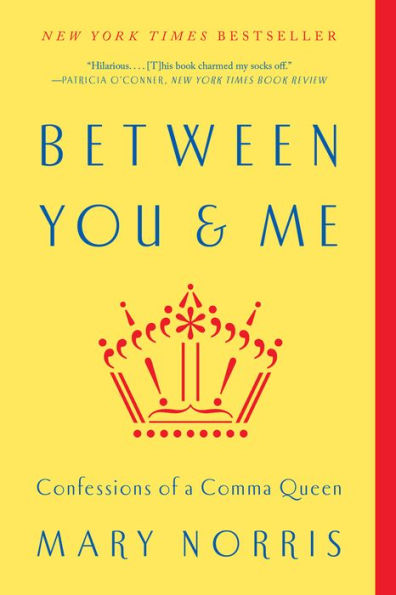
Under no circumstances should any of you readers cite my
writing as evidence of correct usage of grammar, spelling, or punctuation. It
took only a few minutes for us to start finding errors we routinely make. But
the book is fun nonetheless.
Stay warm!
Love,
Rebecca

No comments:
Post a Comment