My blogging history:
2012: diagnosed with and underwent treatment for Primary CNS lymphoma in my brain.
2012-2013: blogged on Caring Bridge.
2013: moved to Blogger.
2017: diagnosed with bladder cancer and blogged through 14 chemotherapy treatments and 37 sessions of radiation therapy, each with its own t-shirt and musical selection.
2018 to February 2020: Treated every 3 weeks with pembrolizumab for spread of bladder cancer to lymph nodes. As of June 2020, continue to be cancer free.
I like Billy Joel. I have liked him for years. I even have a very favorite
Billy Joel song. But for reasons I cannot fathom, I have never seen him perform
live. When he first became popular in the late 1970s, we were either too busy
or had insufficient funds (tickets + baby sitter) to go to many concerts.
A few months ago, I saw somewhere that he had begun a concert series at
Madison Square Garden. His plan was to perform once a month as long as the
shows were sold out. It has now been 17 months and he is still going strong,
and in just two months, with his 65th performance at MSG on the
first of July (sold out, of course), he will break the lifetime record of the
most performances by any entertainer in that venue.
At the time I became aware of this series, the first date that worked for
us and still had available seats was last in last May. So last Thursday evening
we headed into Manhattan for what turned out to be perhaps the best concert we
have ever seen, and we have seen quite a few concerts over the years. His voice
is strong. He seems relaxed and comfortable on stage. He sang almost
exclusively his earlier songs, despite the fact that there were a surprising
number of younger fans, some of whom were probably not even born when he recorded
that material.
Billy Joel’s paternal grandfather was a classical pianist, and there are
hints of classical music influence in many of his songs. Here is a recent
performance of my favorite Billy Joel song, Scenes from an Italian Restaurant,
which is a good example of this.
There are many small joys in life if we just stop to recognize them. We
spent time yesterday with a dear and much younger friend who is undergoing
intense treatment for a relatively rare cancer. About two months ago she
underwent what is often referred to as a “transplant,” a short-hand name for
“high dose chemotherapy and stem cell transplantation.” The drug regimen used is
so toxic that, in addition to the cancer cells, it essentially demolishes the
patient’s immune system, without which survival is virtually impossible. This
procedure is the ultimate assault on the cancer but there are no Google Maps to
tell it where to go, so it has the potential to affect everything: the mouth,
skin, hair, taste buds, fingers and toes…no part of the body is entirely safe
from the ravaging effects of these highly toxic medications. So the patient
then receives bone marrow cells, usually from another person whose bone marrow
adequately matches the patient’s. While the body is adjusting to the new cells
and allowing them to start doing their jobs, patients spend at least a month in
the hospital where their exposure to any pathogens can be as controlled as much
as possible.
While I will not say it was a cake walk, my treatment was less intense. Instead
of being completely out of commission for an entire month straight, I spent the
equivalent of nearly two months in the hospital during a six month period, but
even looking back on my worst days I realize that things could have gone much
worse.
With all that behind me, it is amazing how the memories really do start to
fade. Now that she can receive visitors (without getting too close), we
prepared a meal and went to see her and her devoted father who has been her
caregiver over these long months. As we usually try to do, we brought along a
meal. I made a quiche with spinach and cheese, some rice, and a salad, and we
threw in a container of Haagen Dasz raspberry sorbet for dessert (that one was
my idea, because I remember how yummy that tasted). Can you catch the mistake
in the menu? How could I have forgotten this? That pesky salad, with the fancy
mache lettuce Barry picked up at one of the specialty groceries. But of course
it is not possible to adequately wash salad vegetables to make them edible for
anyone with a severely weakened immune system, so they must be shunned
following the transplant, along with a variety of other foods that interact
with some drugs.
I was so embarrassed! If there is a shining light at the end of this story,
it is that I am far enough past that part of the chemotherapy experience for such
restrictions to have completely slipped my mind. All I wish for our young
friend is that one day she makes a similar mistake. Meanwhile, I hope her
father enjoyed all that salad!
I am not quite sure how I found this video a couple of weeks ago. I have
tried a number of times to find something to say about it, although it speaks
loudly for itself. Then, as I was writing about our friend, thinking about the
beautiful smile she has on her face each time we see her, this video popped
into my mind. It would be easy for her to feel that it is a quite ugly world
that she is seeing all too clearly. But instead, she is able to focus on the
good things that are still a part of her life, and maintain her hopes for the
future. So rather than us helping
her, she is helping us! It never hurts to take a moment
each day to focus on all the good in our lives before we start kvetching
about the imperfections!
In another of my
routine memory lapses, I am not sure what got me thinking about this, but I
started looking to see if I could find pictures of any of the homes I have
lived in over the last 63 years.
From birth to age 7, I lived in
University City, MO at 8614 Orchard Court, a 910 square foot, 2 bedroom, 1
bathroom house. By the time we moved on we were 2 adults and 4 children
squeezed into that tiny home.
From ages 7 to 17, I lived in Olivette,
MO at 15 Queensbrook Place, a 1484 square foot house with 4 bedrooms and 2
bathrooms. It must have seemed so much bigger!
From ages 17-18, I lived in West
Hartford CT at 4 Shepard Road. I do not have the exact details but it was quite
a bit larger than the previous house. It had 4 bedrooms and 2.5 bathrooms, a
good sized living and dining room and large family room.
From there I went to
the University of Rochester, and spent only one summer (1971) living with my
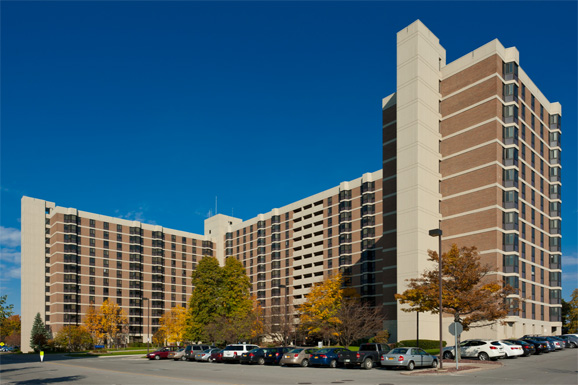
parents. Barry and I were married in 1973. Our first apartment was in the newly
constructed Goler House.
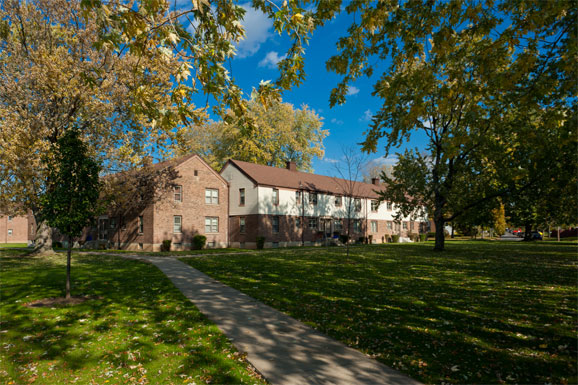
Then we moved to
University Park, where we lived in a small one bedroom apartment until Simmie
was about a year old.
From 1978-1980 we
lived in Patchogue on Long Island while Barry was a postdoctoral fellow at
Brookhaven National Laboratory. I cannot seem to remember our address there.
In 1980, Barry was
offered a position at the University of Texas Health Science Center at Dallas,
with a laboratory at Parkland Hospital. Many of you will recognize that name
because it was the hospital to which the late President John F. Kennedy was
rushed after that fateful gunshot. We lived in an apartment on Harvest Hill
Road; I believe it was 5725, Apartment 402.
In 1986, I completed
my doctorate in Statistics and Barry accepted a position at Brown University.
After a brief time in a rental apartment, we bought a house at 96 Brook Road.
In 1991 Barry was
offered a position at Mount Sinai and we moved to New York. After living
briefly in a rental home, we moved to 38 Pershing Avenue in Yonkers. We lived
in that house for six years.
During those six
years we became increasingly involved with the Hebrew Institute of Riverdale,
and wanting to live closer we sold the Yonkers house. After a year living in an
apartment while searching for the right place, we found it at 571 West 231st
Street in Riverdale. I quickly found this lovely picture on Google maps.
We first found about
the house from a friend who knew the owner. We knew we were in trouble when the
price was quite a bit higher than we wanted to spend and we fell head over
heels in love with it as soon as we walked in the door. We could foresee the
day when we would have our married children and our grandchildren spending time
with us there. Somehow we made it work, and even though neither of our
daughters ever lived there full-time, it has still been our family home. It is
the only house we have ever owned that we truly loved, even with the headaches
that are part of any aging home. So although we talk about selling some day, we
continue to push that date as far into the future as we are able to maintain
it.
This has been an
enjoyable trip down memory lane.
Meanwhile, we did
manage to squeeze in a movie this week: Felix and Meira. The film is about a
young Hasidic couple, Meira and Shulem who live in the Jewish community in
Montreal with their infant daughter. Shulem seems a decent fellow but Meira
wants more from life than the role to which she is constrained by life in that
tight-knit community. She clandestinely takes contraceptive pills and listens
to popular music. She meets a fellow named Felix who has had a very different
life and little by little, in stolen moments, these two very different people
come to care for each other. There are many awkward moments as Meira begins to
experience a very different life than the one she has known.
We might have
expected Shulem to be painted as the “bad guy” here, the unfeeling husband who
would not let his wife go. But that would be an unfair description of him.
Shulem wants her to be happy but it is nearly impossible for him to understand
the emotions driving her or what he can do to improve things.
The movie ends as
Felix and Meira are beginning their lives together with her young daughter. But
somehow I was left feeling that the future did not seem so bright after all.
Was Meira just one of those people who will never be happy with what she has?
As wonderful as Felix may have seemed, it is easy to see her becoming tired of
him as well, and needing to move on to the next challenge. All in all, a
well-acted and thought-provoking film.
We are heading into a
three-day marathon: Sabbath followed immediately by the two day holiday of
Shavuot, which commemorates the revelation at Mount Sinai. My favorite
tradition on this holiday revolves around the food. When the Jewish people
received the Torah, they did not have time to go out and properly slaughter the
cows and prepare the meat according to the rules contained therein, so it has
been traditional to eat dairy foods on this holiday. We have a refrigerator
full of cheese blintzes and a big cheesecake. I also made a fresh blueberry pie
with home-made crust (have not done that in years) and some lemon butter
cookies. I had baked very little over the past twenty-five years and it has
been nice getting back into it.
Have a wonderful weekend
and for those observing, chag sameach!
In a recent message
to a much younger acquaintance who had suggested I try texting a mutual friend
who had not responded to my efforts to contact her, I wrote
Asa"womanofacertainage," I
have to admit I am not much into texting, but I have learned to use it for just
two people: [this mutual friend] and our plumber!
Although I use the expression
“woman of a certain age” periodically, I wanted to learn more about its source
and intended meaning.
I love Google! I very
quickly discovered an article written and published 20 years ago by William
Safire, the late New York Times political columnist and author of the New York
Times Magazine “On Language” column.
ON LANGUAGE; A Woman of a Certain Age
By WILLIAM
SAFIRE
Published: July 2, 1995
HOW OLD IS A
woman of a certain age?
Only a Nosy
Parker would try to find out. But the expression is becoming androgynous, and
the age seems to be creeping upward.
Sidney Wade, a
woman who lives in Gainesville, Fla., reports that she was complaining to a
friend, Debora Greger, about a loss of hair: "My friend remarked that we,
as women of a certain age, were prone to a number of peculiar developments. At
first I was surprised by her use of the phrase to describe us (we are mildly
ripening), remembering it from my more youthful days in France as an insulting
kind of polite elocution but one that remains rather wonderful and
precise."
Then Ms. Wade
was stunned to see a headline in The New York Times "3 Explorers of a
Certain Age, Scaling Mountains and More" about three men in their 80's.
"Reeling, I reported this to Debora, who supposes that the phrase itself
seems to have developed a pronounced middle-aged spread. Is this so? I hope
not."
The phrase, in
English, can be cited to 1754: "I could not help wishing," wrote an
anonymous essayist in Connoisseur magazine, "that some middle term was
invented between Miss and Mrs. to be adopted, at a certain age, by all females
not inclined to matrimony." (This was two centuries pre-Ms.)
The certain
age suggested spinsterhood; the poet Byron in 1817 wrote, "She was not
old, nor young, nor at the years/Which certain people call a certain age,/Which
yet the most uncertain age appears." Five years later, in a grumpier mood,
he returned to the phrase: "A lady of a 'certain age,' which means
Certainly aged." Charles Dickens picked it up in "Barnaby
Rudge": "A very old house, perhaps as old as it claimed to be, and
perhaps older, which will sometimes happen with houses of an uncertain, as with
ladies of a certain, age."
The Oxford
English Dictionary defined that sense of certain as "which it is not
polite or necessary further to define." That was the sense meant by
William Dean Howells when he wrote of "gentlemen approaching a certain
weight." The special sense reverses the literal meaning of the word
certain, which is "fixed, definite" (much as "I could care
less" means "I could not care less").
The phrase was
repopularized in a 1979 book by the psychotherapist Lillian B. Rubin,
"Women of a Certain Age: The Midlife Search for Self," in which
midlife spanned 35 to 54.
Reached in San
Francisco, Dr. Rubin, whose book indicates she is now in her early 70's, was
surprised to learn of the long English history of the phase because "it
has a long history in French, where it refers to women of fortyish and
thereabouts who are able to initiate boys and young men into the beauties of
sexual encounters. The early use in English seems to be about spinsterhood, but
the French meaning has nothing to do with marriage."
In French, the
phrase has erotically or sexually charged overtones. "It comes from a
society where sexuality is freer," Dr. Rubin notes, "and more
understood as an important part of human life."
The phrase in
French is femmes d'une certaine age. The term, however, can apply to either
sex. Without the certain, the phrase un homme d'un age translates literally as
"a man of an age" and is defined in the Oxford-Hachette French
Dictionary as "a man of advanced years."
And now to the
point: is that certain age getting older?
"When I
wrote the book in 1979," Dr. Rubin says, "the 'women of a certain
age' were in their late 30's and early 40's. I think that has changed with the
baby boomers and the lengthening of the life span. I'd say the 'certain age'
has now moved to the age of 50 or 55."
Look at it
this way: late 30's or early 40's is no longer that "certain" age;
it's moved up a decade. The good news is that 40 is still young, at least
linguistically. That's how it seems to a language maven of a certain weight and
getting long in the tooth.
Which brings
us to long in the tooth, which I used in a political column in an unkind
reference to vigorous Senator Bob Dole. (The first user was William Makepeace Thackeray
in an 1852 novel: "She was lean, and yellow, and long in the tooth; all
the red and white in all the toyshops of London could not make a beauty of
her.") In my piece, I was impelled by wordmavenhood to give the derivation
of the expression: "As horses age, their gums recede, making their teeth
appear longer." My source was the Oxford English Dictionary:
"displaying the roots of the teeth owing to the recession of the gums with
increasing age; hence gen., old."
This folk
wisdom about the illusion of tooth-lengthening was promptly challenged by
Michael Brisbane McCrary, former Hong Kong polo player and now a squire in
Hunter, N.Y.: "Horses actually do get 'long in the tooth.' It is not
receding gums; their teeth continue to grow out (like beavers, and there is a
word for it beginning with 'ex-') throughout their lives until the teeth
actually fall out."
Mr. McCrary
(his wife is Jane Buckle; her long-panted-for book, "How to Massage Your
Dog," is scheduled for publication this fall) continues: "The growth
of the horses' teeth is required because they would wear down in the process of
eating in a natural setting. As the teeth grow out, lines show; this is how one
usually tells the age of a horse. And this is the background to the phrase
'Don't look a gift horse in the mouth'; i.e., if it is a gift, don't ask how
old it is."
That moved me
to call the National Zoo. I don't call the Bronx Zoo anymore; any zoo that
calls itself a "wildlife center" cannot be trusted. (A spokesman at
our national zoological park, Mike Morgan, remembered me as the one who
revealed the reason that pandas have reduplicating names like Ling-Ling and
Hsing-Hsing they can't hear well and zoo keepers have to call them twice.)
It seems that
Mr. McCrary could be right and all of us lexicographers could be wrong.
"As horses age," noted Dr. Richard Montali, one of the National Zoo's
veterinarians, "their teeth actually do continue to grow for some time.
The incisors appear to look longer, but it's mainly because the angle of the
teeth changes. Instead of perpendicular growth, the teeth angle out as they
grow and wear."
Maybe the gums
recede a little as the growing teeth angle out; that's why horses' teeth reveal
their age. As a result of receiving this new information, and with deference to
animal rights groups, I will no longer refer to old horses as being long in the
tooth. They are horses of a certain age.
Dr. Lillian Rubin
(above) notes that back in the 1970’s, “women of a certain age” were in their
late 30’s and early 40’s. By the late 1990’s, when Mr. Safire wrote this piece,
the definition had shifted to include women who were 50-55. Another twenty
years have now passed, and once again the definition has shifted to include
women who are well into their 60’s. We baby boomers do have to take ownership
of all social change, don’t we?
On a sadder note, BB
King died on Friday at age 89. Barry’s and my very first “real” date (as
opposed to hanging out on the campus of the University of Rochester) was to a
BB King concert in New York in the summer of 1971. We have seen him a number of
times over the years and always enjoyed his concerts.
So go out and do
something that makes you feel young again, and have a wonderful week!
You’re invited to Memorial Sloan Kettering’s Survivorship Celebration.
Co-star of TLC's Little Couple, neonatologist, and cancer
survivor, Dr. Jennifer Arnold, will deliver the evening’s
keynote speech. Following, enjoy a reception; attend survivor-focused
information sessions; pick up resources from our booths, and much more!
Survivorship
Celebration
Tuesday, June 23, 2015
You are invited with one guest.
5:30 PM
Check-in
6:00 PM
Speaking Program
7:00 PM - 8:30 PM
Reception, Information
Sessions,
and Resource Booths
Although I was
treated three years ago, this is the first such invitation I have received. So
I wondered whether this was the first such event, or whether there is some
significance to the three-year survival point.
The first hypothesis
was fairly easily answered on the MSKCC web page, where I found the following
previous celebrations:
More
than 2,000 patients and their guests, caregivers, and healthcare providers
attended Memorial Sloan Kettering’s cancer survivorship celebrations last
month.
Memorial
Sloan Kettering marked National Cancer Survivors Day at its Manhattan campus
and at its regional sites in Westchester, New Jersey, and Long Island.
Olympic
gymnast Shannon Miller was diagnosed with germ cell ovarian cancer, a very rare
disease, in 2011 and treated at Memorial Sloan Kettering. Learn more about her
inspiring story.
Clearly hypothesis #1
was not supported by the available data. That led me to hypothesis #2, and got
me to thinking about the question of what constitutes a “cancer survivor.” I
found this:
The National Coalition for Cancer Survivorship (NCCS)
pioneered the definition of survivor as being any person diagnosed with cancer,
from the time of initial diagnosis until his or her death. This expansive
definition of "survivor" includes people who are dying from
untreatable cancer. NCCS later expanded the definition of survivor even further
to include family, friends and voluntary
caregivers who are affected by the diagnosis in any
way.[6] The
US National Cancer Institute's
Office of Cancer Survivorship uses a variant of this expanded definition.[6]
Based on this
definition, I should have been invited to the survivorship celebration starting
in 2012, the year I was first diagnosed and treated. To be honest, I do not
think I would have appreciated receiving such an invitation at that point, when
I had completed only 4 of the 7 planned cycles of chemotherapy, and it was not
clear that I was responding as well as we had hoped. What I do not know is why
I was not invited for the last two years, the first and second anniversaries of
diagnosis, in 2013 and 2014. As I have often noted about MSKCC, I am grateful for
their incredible expertise in the treatment of rare cancers, but most patients would
be sorely disappointed if they expected MSKCC to provide the TLC that other
centers emphasize.
The main point is
that I am here now, three years later, and whether or not I can officially be
called a “survivor” really does not matter much. We just have to take things
one day at a time. And we plan to attend the event this June.