It has been two weeks
now since the completion of those 37 radiation therapy treatments. When I wrote
a week or so ago about the mold that was used to position me for each session,
I mentioned that I had wanted to take a picture of the therapy room but that
the staff preferred I not do that. This morning it dawned on me that I could
almost assuredly find pictures on line, and lo and behold there are more than
an ample number to be found if you just enter “radiation therapy equipment
pictures” into your browser. Here is one that looks quite a bit like the machine
that was used for my treatment.
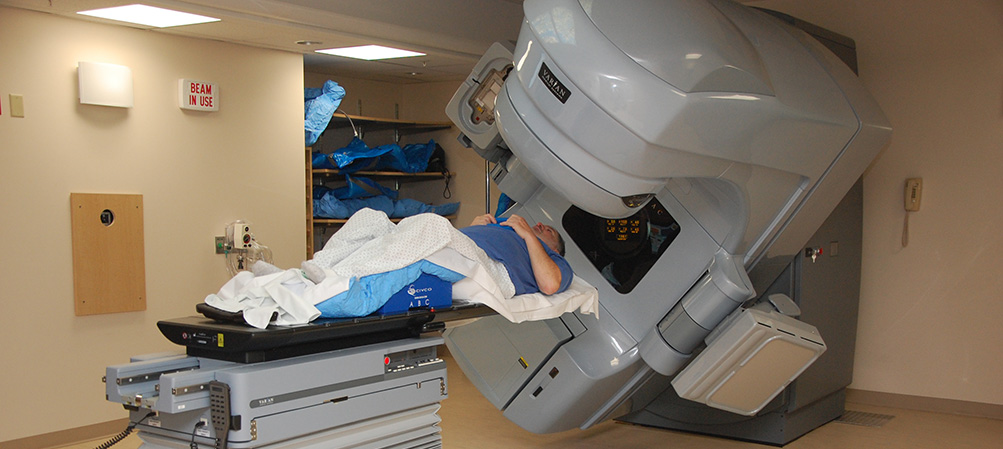
What reminded me about this is a thought I had yesterday: if there was ever any doubt in my mind about whether that machine was truly doing anything other than moving around, the side effects I am now experiencing offer proof that it was doing quite a lot. What else could possibly explain the ongoing frequency and pain with urination, not to mention the skin discoloration in the treated area?
Here are some relevant points I learned from reading about urinary and bladder problems following radiation therapy to the pelvis on the National Cancer Institute web site (emphasis mine):
· Radiation therapy to the pelvis (including reproductive organs, the bladder, colon and rectum) can irritate the bladder and urinary tract. These problems often start several weeks after radiation therapy begins and go away several weeks after treatment has been completed.
Irritation of the bladder lining (radiation cystitis):
· pain or a burning feeling when you urinate
· blood in your urine
· trouble starting to urinate
· trouble emptying your bladder completely
· feeling that you need to urinate urgently or frequently
So, it looks like the fun will continue for a while. But I am hopeful that the benefit far outweighs the downside.
Meanwhile, in an effort to continue to return to some sense of normal life, we saw the movie “Marshall,” a film (not documentary) about the early career of Thurgood Marshall. While best known for his successful arguing of cases like “Brown v. Board of Education” in 1954, and his later career as a Supreme Court Justice, this film is about a 1941 case involving Eleanor Strubing (played by Kate Hudson), a wealthy white woman from Greenwich, Connecticut, who accused her black chauffeur, Joseph Spell (played by Sterling K. Brown) of raping her and trying to kill her by pushing her off a bridge. The NAACP sent attorney Thurgood Marshall (played by Chadwick Boseman) to defend Mr. Spell, but the local court would not allow an out-of-state lawyer (more likely, would not allow a black lawyer) to serve in this role, so local attorney Sam Friedman (played by Josh Gad) was assigned and reluctantly took on the case.
It was a complicated case, particularly because Mr. Spell thought he was helping himself by claiming that he had not been anywhere near Ms. Strubing on the night of the incident. [Spoiler Alert: I am not divulging anything here that is not a matter of public record, but if you plan to see the film and want to preserve the suspense you should stop reading this now.] In fact, what we eventually learn is that the liaison between Mrs. Strubing and Mr. Spell was completely consensual: she claimed he had raped her for fear that she may have become pregnant from this lapse in judgment, and he lied because he assumed, almost assuredly correctly, that no one would believe what actually happened. In the end, the jury did believe the truth. The movie was sometimes painful to watch, a reminder of a bleak time in our history which, despite the election of our 44th president, we may not have completely overcome.
For the first time in a long time, I actually made it through the movie without having to use the restroom part way through! It was, however, a mad dash as the closing credits began.
Love,
Rebecca

No comments:
Post a Comment